
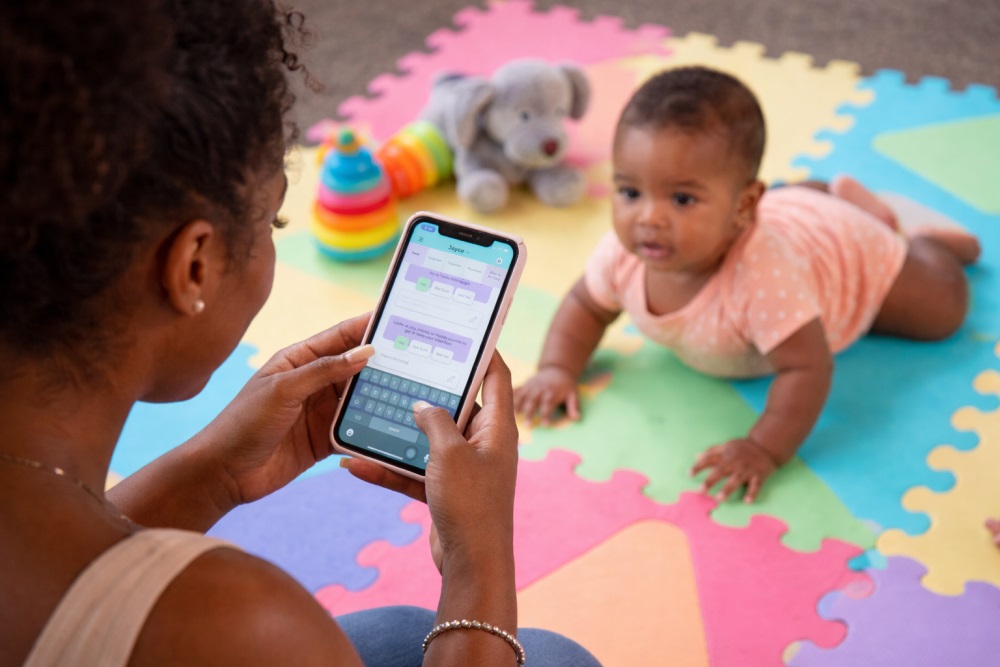
It’s 2:47 AM. You’re holding your four-month-old in the dim glow of your phone, one thumb scrolling through a parenting forum while the other gently pats a tiny back. The question circling your mind isn’t new: Is my baby where they should be?
You’re not alone. According to a 2024 report by Owlet, 61 per cent of parents say exhaustion is the defining emotion of the first year, while 32 per cent describe themselves as anxious. Those numbers feel low to anyone who’s been through it. But here’s what the research is now telling us: structured milestone tracking doesn’t just ease that anxiety; it can genuinely change outcomes for children who need extra support.
The CDC Rewrote the Rulebook; and Most Parents Don’t Know
In 2022, the Centers for Disease Control and Prevention and the American Academy of Pediatrics published the most significant overhaul of child developmental milestones in nearly two decades. The changes weren’t cosmetic. Roughly 40 per cent of the milestones on the checklist are entirely new. New age categories were added for 15-month and 30-month-olds. Crawling was removed altogether, because research shows many babies skip it entirely and move straight to standing and walking.
Perhaps the biggest shift was methodological. The old benchmarks represented the age at which half of children could perform a given skill. The revised milestones now reflect the age at which 75 per cent or more of children have reached that point. That’s a deliberate move. As Dr Paul Lipkin, a developmental–behavioural paediatrician who helped lead the revision, explained in the CDC’s announcement: earlier identification leads to earlier intervention, and earlier intervention leads to better outcomes.
The practical implication for parents is significant. Under the old system, a child who hadn’t started walking at 12 months might have been met with a reassuring “let’s wait and see.” Under the new framework, walking is expected by 15 months, and a child who hasn’t reached that milestone should be considered for further screening; not a pat on the head.
Why “They’ll Catch Up” Can Be Costly Advice
The numbers are sobering. An estimated one in six children has a developmental disability. Evidence-based early interventions; speech therapy, occupational therapy, physiotherapy, and targeted developmental programmes; can substantially improve outcomes, particularly when they begin in the first three years of life. Yet a peer-reviewed editorial published in American Family Physician noted that many children with developmental delays are not identified or connected with services during early childhood, precisely when those services would be most effective.
The gap between “something seems off” and “my child is receiving support” is where structured tracking makes a real difference. When parents document milestones consistently; not just the big ones like first steps or first words, but the subtler markers like reaching for objects, responding to their name, or making eye contact during play; they build a developmental history that paediatricians can actually work with.
This is one of the reasons we built the milestone tracker at Baby Steps Milestones. We wanted parents to have a single, clean tool for logging progress across motor, language, cognitive, and social-emotional skills; one that aligns with the updated CDC categories and makes it easy to spot patterns or share a summary with their child’s doctor at the next check-up.
What the Research Says About Digital Tracking Tools
A content analysis published in the Journal of Medical Internet Research examined 149 child development apps across the Apple App Store and Google Play. The researchers found that only about 15 per cent of apps had primary functions related to developmental health promotion and milestone screening. The majority focused on basic data logging; feeds, nappies, sleep; without connecting that data to developmental context or offering actionable guidance.
That’s the gap that matters. Logging when your baby last ate is useful for the first few weeks. Understanding whether your nine-month-old is tracking objects, responding to familiar words, and transferring items between hands; that’s what feeds into a meaningful developmental picture.
A separate study from Philips Avent, published in JMIR mHealth and uHealth, demonstrated that parents responded positively to personalised, data-driven insights generated from their own tracking behaviour. When an app moved beyond passive data collection to offer context-specific feedback; for example, noticing that a parent’s tracked feeding pattern suggested a potential issue; engagement and trust both increased.
Five Developmental Areas Every Parent Should Track
The CDC’s revised milestones cover five key domains, and understanding them helps you move beyond the “is my baby normal?” panic into something more productive.
Gross motor skills encompass the large-body movements: holding their head up, rolling over, sitting without support, pulling to stand, and eventually walking. The revised guidelines place walking at 15 months rather than 12, reflecting what the majority of children actually do.
Fine motor skills involve smaller, more precise movements; grasping objects, transferring a toy from one hand to the other, using a pincer grip to pick up food. These are easy to overlook in daily life but are strong indicators of neurological development.
Language and communication covers everything from early cooing and babbling to first words and simple two-word phrases. The revision shifted the benchmark for saying around 50 words from 24 months to 30 months, since that’s when 75 per cent of toddlers reach that level.
Cognitive development includes problem-solving, curiosity, cause-and-effect understanding, and exploratory play. Does your baby look for a toy you’ve hidden? Do they bang objects together to see what happens? These are cognitive milestones that many parents don’t think to track.
Social and emotional development is where the most new milestones were added in the 2022 revision. Smiling to get your attention at four months, for instance, is now a named milestone; a recognition that social-emotional skills are early, observable, and worth monitoring. These markers are also among the most important for early identification of autism spectrum conditions.
If you’re looking for a structured way to track across all five areas, our free milestone tracker organises everything by your baby’s exact age and makes it simple to see which milestones have been met, which are emerging, and where gaps might be forming; without drowning you in data.
Beyond the Checklist: Why Activities Matter as Much as Tracking
Tracking tells you where your child is. Activities help them get where they’re going. The CDC’s own materials emphasise this: every milestone checklist includes recommended tips and activities for parents. But those suggestions are, by design, brief. They’re starting points, not programmes.
Research consistently shows that targeted, age-appropriate play drives development more effectively than passive observation. Tummy time strengthens the neck and core muscles needed for rolling and crawling. Turn-taking games with a caregiver build the social-emotional circuits that underpin communication. Sensory play; water, textures, sounds; promotes cognitive connections that support later problem-solving.
The key is matching the activity to your child’s developmental stage. A game that’s perfect for a six-month-old can frustrate a three-month-old and bore a nine-month-old. That’s why pairing milestone tracking with age-matched developmental activities creates a feedback loop: you track what your baby can do, then use activities designed to strengthen the skills they’re working on next.
When to Stop Googling and Start Tracking
There’s a moment every new parent hits. Maybe it’s at a playgroup when another baby the same age is doing something yours isn’t. Maybe it’s a well-meaning comment from a grandparent. Maybe it’s just the 3 AM scroll through forums that all seem to contradict each other.
The research is clear: unstructured information-seeking increases parental anxiety. Structured, evidence-based tracking reduces it. When you can look at a clear visual summary and see that your baby has met 14 of 16 milestones for their age, and the two remaining ones are in the “emerging” category, that’s a fundamentally different emotional experience from trying to piece together forum posts at 2 AM.
And if your child is genuinely behind in a specific area, having documented tracking data means you’re not walking into the paediatrician’s office saying “I think something might be off.” You’re walking in with specific observations across specific developmental domains, which is exactly what healthcare providers need to decide whether further assessment is warranted.
The Bottom Line
The science of child development hasn’t changed; babies still learn to smile, roll, babble, and walk in roughly the same order they always have. What has changed is how precisely we can define when most children reach these points, and how much evidence we have that catching delays early leads to meaningfully better outcomes.
You don’t need to become a developmental psychologist. You just need a clear framework for understanding what to look for, a simple way to log what you see, and the confidence to act if something doesn’t seem right. That’s what structured milestone tracking gives you; not perfection, but clarity.
If you want to start tracking your baby’s development today, our milestone tracker covers all five CDC developmental domains from birth through 24 months and beyond. It takes about two minutes to complete each check-in, and everything is written in plain language; no jargon, no guesswork.